Silver’s Price Spike Tells a Story Most People Aren’t Hearing
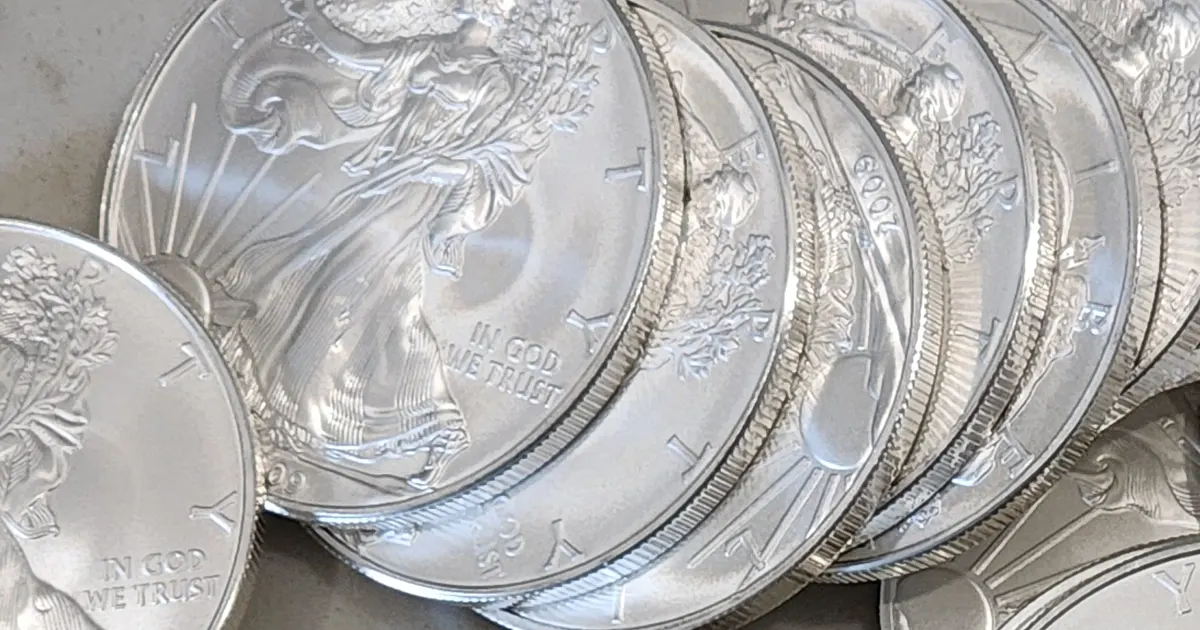
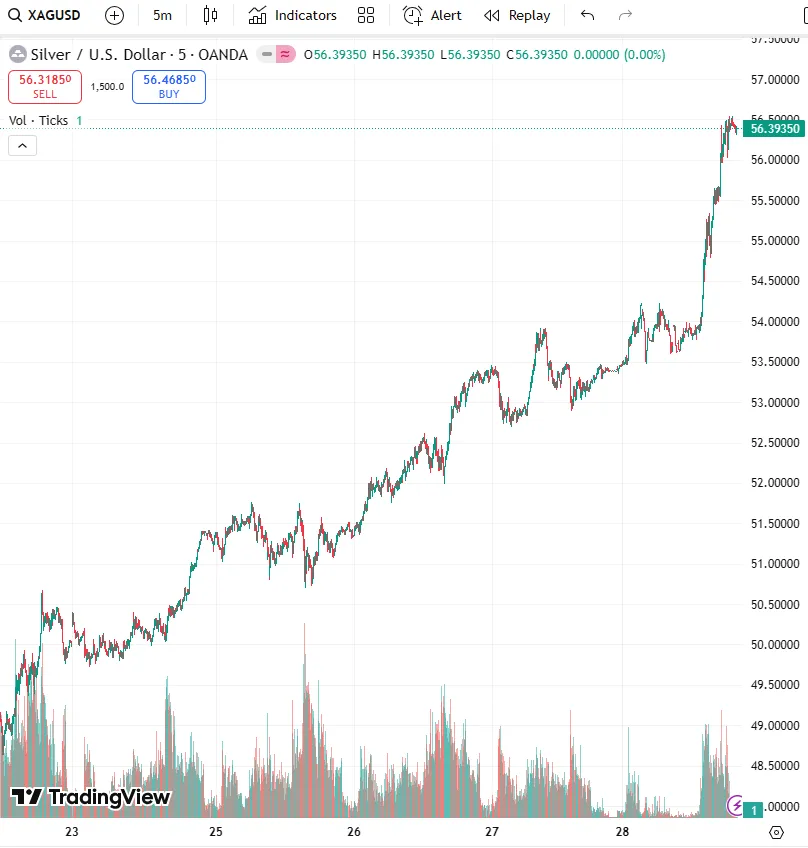
Silver just did something nobody expected—not even the people who were already bullish on it. Yesterday it hit an all-time high, closing at $56.33, up more than 10% in a single week after starting around $50.50. It’s November 2025, and somehow a metal most people forgot about is suddenly front-page material again.
But here’s what’s interesting: the headlines and the reality on the ground don’t match. Not even close.
I run Gold Silver Crypto here in Utah, and despite the fireworks in the global charts, the public market has been soft, almost sluggish. Retail buyers aren’t stampeding in. Refiners are backed up, dealers are fully stocked, and some shops can’t give the stuff away on the street.
So why is silver ripping when the local market feels downright sleepy?
Let’s break it down.
The Supply Story Isn’t as Simple as the Analysts Say
For the last few years, analysts have repeated a single talking point: silver is in a structural supply deficit.
And sure—on paper, that’s partially true.
2021 through 2024 saw multi-year deficits totaling hundreds of millions of ounces. Not insignificant.
But here’s the part most people skip: “deficit” doesn’t mean “shortage you can feel at the counter.”
A lot of that deficit isn’t about coins and bars at all—it’s about industrial flows, mine output timing, recycling cycles, and opaque global inventories. Meanwhile, here in the U.S., especially the Intermountain West, physical silver is plentiful. Dealers are stocked. Refiners are behind, but not because demand is overwhelming—because capacity hasn’t kept up, and the margins for refining low-grade scrap aren’t worth hurrying.
So is there a real shortage?
Not in the way people imagine.
But the imbalance between industrial demand and new mine supply is real enough to matter at the macro level—even if it hasn’t translated to a frenzy at the shop counter.
Industrial Demand Is Driving This Market, Not Retail Panic
While retail buyers here in Utah aren’t exactly lining up, factories and manufacturers definitely are.
A few numbers still matter—maybe even more now than they did last year:
- Industrial offtake has kept climbing, especially in solar and power electronics.
- Solar consumption is projected to breach 250+ million ounces in 2025, up massively from a decade prior.
- EVs, battery systems, AI-data-center cooling infrastructure—these all quietly eat silver in amounts that add up fast.
- Substitution is limited. Silver is still the most conductive metal we’ve got.
None of that is hype. That’s physics.
And industrial users don’t care whether retail investors are asleep or awake—they keep buying because they have to.
Why the Price Spiked Even Though the Market Feels “Soft”
Here’s the part most dealers don’t talk about:
You can have a weak retail market and a strong global price at the same time.
Commodity markets move on:
- futures positioning
- institutional flows
- industrial purchasing contracts
- energy input costs
- geopolitical stress
- supply chain pressure
Retail demand is usually the smallest piece of the puzzle. The guy walking into a shop to pick up 100 ounces isn’t what pushed silver from $50 to $56 this week.
But tightening mine output, years of underinvestment, rising industrial needs, and a flight to hard assets amid global uncertainty?
That absolutely can.
The price today reflects global forces—not the mood of the Utah walk-in customer.
The Gold–Silver Ratio Is Still Out of Whack
Here’s a strange part of this new 2025 landscape:
- Mine supply ratio: still around 7:1 silver to gold
- Geological discovery ratio: roughly the same
- Price ratio recently: still hovering far above historical norms, even with silver’s surge
Even with silver above $56, gold hasn’t moved proportionally. The ratio hasn’t normalized.
And historically, it tends to drift toward its long-term average whether people believe in the story or not.
That’s not a prediction—it’s just math meeting 150 years of market behavior.
So What Does This Mean for Silver Holders?
I talk to customers every week who’ve held silver for years—some bought at $12, some at $28, some at $35. Many are shocked that silver has finally broken out while the local market still feels like a ghost town.
Here’s the reality:
- The retail quiet doesn’t mean the fundamentals are weak.
- Industrial consumption remains the most important force in the room.
- The “deficit” narrative is overstated in some ways but directionally correct.
- Refiner backlogs don’t tell you demand is hot—they tell you the refining system is inefficient.
- And yes—the global market is waking up faster than the local one.
Will silver keep climbing?
I won’t pretend I know. No one does. Analysts are calling for $80, $100, even $130. Some will be right by accident. Some will be wrong by conviction.
But here’s what I can say:
If you’re holding silver in 2025, you’re holding an asset that the world quietly needs, even if your local dealer’s shop looks calm. The price is telling one story; Main Street is telling another. But the fundamentals—industrial consumption, limited substitution, constrained mining capacity—haven’t gone away.
Do your own research.
I’m not giving financial advice—just sharing what the numbers and the real-world experience seem to be saying.
Ready to Buy or Sell in Utah Valley?
Gold Silver Crypto is Highland, Utah's trusted precious metals dealer. Call or text for a same-day evaluation.