Silver’s Surge Reveals What Most Investors Miss About Real Money
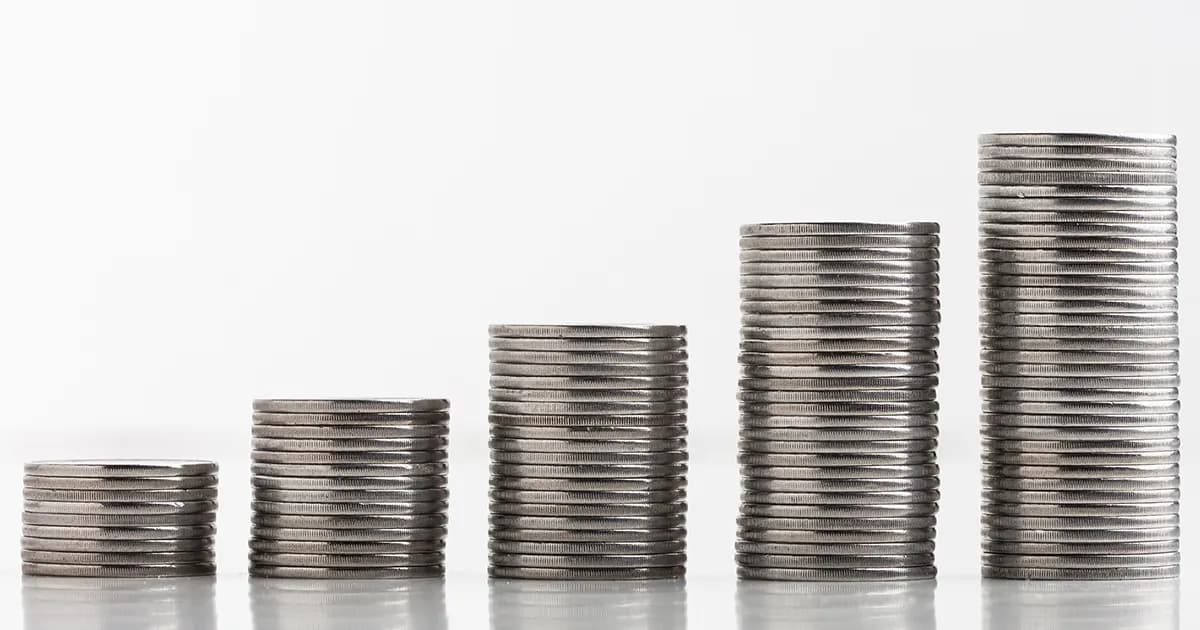
Silver hit $64.69 on December 11, 2025. An all-time high. A 45-year record broken.
At the same time, the cryptocurrency market slipped 2.74% in a single day.
The headlines framed this as a battle: old money versus new money, physical assets versus digital innovation, stability versus speculation. But after spending decades running a mint in Ohio and now facilitating transactions between metals and crypto at my Utah location, I can tell you the real story is more complicated than the narrative most people are buying.
What’s actually happening at ground level tells a different story than what the market cheerleaders want you to believe.
What’s Walking Through the Door Right Now
People are doing two things at once, and that’s confusing everyone looking only at price.
Yes, silver briefly pushed toward $65 before pulling back more than $2 in a short window. But zoom out. Silver has roughly doubled this year while Bitcoin sits about 25% below its all-time high. That divergence is changing behavior in ways the headlines miss.
Some long-time holders are taking profits. When spot was under $18 just three years ago, nobody called it exciting. Now those same holders are sitting on 100%, 200%, or even greater gains. For them, selling isn’t a statement about the market topping out. It’s rational profit-taking or life-driven decision-making.
New buyers are stepping in. They openly say they feel late. They watched the first move happen without them, and now the combination of price action and nonstop headlines has forced a reassessment.
What walks through my door isn’t panic or euphoria. It’s recalibration.
People are realizing silver isn’t just a trade anymore. It’s being repriced because the physical market is tighter than most expected.
The Supply Story Nobody Wants to Admit
Here’s what matters: retail demand is not what’s driving this move.
This isn’t a meme rally or speculative frenzy. The real driver is supply.
The Silver Institute forecasts ongoing deficits through 2026, with 2025’s projected shortfall alone at approximately 117 million ounces. Even more striking, this marks silver’s fifth consecutive year of structural supply deficit, with global supply estimated at 1,030 million ounces against projected demand of 1,148 million ounces.
That’s a gap of 187 million ounces this year alone.
Mining and refining have become backlogged. A major refiner went offline. Silver is a small market with thin margins, so even modest disruptions create outsized price effects. Industrial demand hasn’t gone away, investment demand is steady, and supply simply hasn’t kept up.
The refining bottlenecks tell the real story. Industry reports show backlogs running four weeks or more. There’s plenty of raw silver in doré bars, but not enough refined metal to meet investor demand.
London’s “free float” silver stood at approximately 155 million ounces in September 2025. That’s sufficient to cover only about six weeks of global demand. Typical levels exceed 300 million ounces.
The market is literally half as deep as it should be.
Why the ETF Headlines Miss the Point
When headlines talk about SLV inflows surpassing gold ETFs, they’re talking about financial demand, not physical retail demand.
ETFs are primarily a capital allocation vehicle. They reflect positioning decisions made by funds, advisors, and momentum-driven capital. Not someone walking into a shop or taking delivery of metal.
That kind of demand can turn on quickly. It can turn off just as fast.
The world’s largest silver ETF, SLV, reportedly saw almost $1 billion in weekly inflows. Physical silver-backed ETFs absorbed more than 15.3 million ounces in four days. The iShares Silver Trust recorded $644.3 million in inflows in the first half of the year, pushing its holdings to a record 1.13 billion ounces.
Those numbers are real. But here’s the distinction most people miss:
ETF flows react to price. Physical supply constraints set the price.
The SLV inflows are responding to a market that’s already tight. They didn’t create the shortage. The shortage was already there, driven by mining and refining bottlenecks. The ETF data is a symptom of the move, not the cause.
While the ETF headlines make it look like “retail” is piling in, what’s really happening is financial capital waking up to a supply problem that’s been building quietly in the physical market for a long time.
The Conversation About Being “Late”
When someone walks in saying they feel late to the rally, I slow the moment down.
We don’t confirm the fear. We don’t push the idea that they need to rush. Instead, we reframe what “late” actually means.
Silver has already had a strong move. Expecting straight-line gains from here isn’t realistic. There will be pullbacks. There will be volatility. Anyone buying now needs to be comfortable with that.
If someone is looking for a quick flip, we push back pretty hard.
Where we do meet them is on the structural case. We talk about supply constraints, refining bottlenecks, and the fact that silver is still historically cheap relative to gold and other hard assets.
The gold-to-silver ratio sits near 88:1 as of late 2025. Well above its historical norms. Averaging everything since 1900, the ratio lands somewhere between 50:1 and 60:1. Recent decades point toward 60:1 to 75:1 as the normal range.
Today’s 80:1+ reading sits above historical norms.
History shows that when the ratio gets far above its long-term average, silver often stages a catch-up rally.
So the message isn’t “you’re early” or “you’re late.” It’s “why are you buying, and how long are you prepared to hold?”
If you’re thinking in terms of preserving purchasing power or building a position over time, then buying even after a big move can still make sense. If you’re chasing headlines, we’re very clear about the risks.
The goal of the conversation is to align expectations with reality. Not to sell the rally.
The Three Problems That Don’t Go Away
Silver has three big problems that most dealers won’t admit: storage, insurance, and liquidity.
A rally doesn’t fix those problems. In some ways, it makes them worse.
When silver was $18, storing $10,000 worth meant dealing with about 555 ounces. At $64, that same $10,000 is only 156 ounces. The storage problem gets easier in terms of volume, but the insurance and security concerns scale with value, not weight.
The liquidity problem is the one nobody talks about honestly.
You can’t just walk into any shop and get spot price for your silver. The final price for physical silver always includes a premium, typically ranging from 2% to 15% or more above spot price. That covers refining, manufacturing, shipping, insurance, dealer overhead, and profit margins.
This is a structural market reality, not dealer manipulation.
Right now, buyers for silver are scarce in certain markets. Refiners don’t want junk silver. When people come to me, I offer what I can. I’ve had numerous people tell me the offer is too cheap. Often they come back after shopping around.
You’re just not going to get spot for precious metals now. Maybe not ever.
Some people are disappointed. But I get repeat customers again and again. We have lots of 5-star reviews for a reason. Transparency builds trust over time, even when market realities mean the price isn’t what people hoped for.
That’s why I created Gold Silver Crypto in the first place. To solve the liquidity problem. To make metal liquid. To offer cash for gold and silver with very good pricing on both buying and selling.
What the Crypto Comparison Actually Shows
The cryptocurrency market slipped 2.74% while silver hit all-time highs. Economist Peter Schiff pointed out that over the past four years, Bitcoin has lost over half its value when priced in silver.
People want to frame this as metals “winning” over crypto. From where I sit, facilitating transactions in both worlds, that’s not what’s really happening.
What’s happening is a reassessment of risk and value.
I recently paid for gold with part crypto (BTC for that exact transaction) and part cash. I’ve also sold gold for USDT and USDC and done other exchanges. They are exchanges of value, real money.
I treat gold, silver, cash, and crypto as legitimate forms of money. I’m willing to mix and match them in a single transaction.
The false choice between “old money” and “new money” misses the bigger picture. Understanding both worlds matters more than picking sides.
Industrial demand accounts for 59% of silver usage. Solar panel production alone consumed 197.6 million ounces in 2024, with projections exceeding 700 million ounces in 2025. Electric vehicles require 25-50 grams of silver per unit.
Silver isn’t just an investment play. It’s a critical industrial commodity with supply constraints that can’t be fixed quickly.
Roughly 70% of silver is a byproduct of other metal mining. That makes rapid production adjustments challenging. Unlike most commodities where high prices stimulate supply increases, silver’s byproduct nature limits supply response.
This suggests elevated prices may persist longer than typical commodity cycles.
What This Moment Actually Reveals
Borrowing fees for SLV shares exploded from a typical 0.5% to over 12%, with zero shares left available to borrow. At one extreme moment, spot silver was up $1.40 while the front-month futures contract rose only 20 cents.
That disconnect shows investors want real, physical silver now. Not a promise to deliver later.
Geographic arbitrage opportunities emerged as physical premiums in Asia surged up to $8 an ounce higher than Western prices, prompting traders to air-freight silver bars across the Atlantic.
A record amount of silver flowed into London in October 2025 to ease a historic squeeze. But this relief came at a cost. Inventories in warehouses linked to the Shanghai Futures Exchange hit the lowest in nearly a decade.
This is the “whack-a-mole” nature of physical tightness.
What this moment reveals is how people reassess value during uncertainty. When digital markets experience volatility, some capital flows toward physical assets. When physical markets tighten, some investors look for liquidity in financial instruments.
The movement isn’t one-directional. It’s dynamic.
After 30 years of building businesses across retail and manufacturing, I’ve learned there are no huge secrets. Just experiences you don’t get when you’re not part of those businesses.
I’ve seen outright scams in both precious metals and crypto. I’ve seen excessively high prices from high-pressure sales operations. I saw a place locally where I could facilitate buying and selling with transparency.
That’s why education matters more than prediction.
I don’t have a crystal ball. Do your own research. But I can tell you what I’m seeing on the ground, what the numbers actually show, and what the structural realities are that most headlines gloss over.
Silver hit an all-time high. Crypto dipped. But the real story isn’t about which one “wins.”
The real story is about understanding what drives value, what creates scarcity, and what happens when financial demand meets physical constraints in a market too small to absorb both without stress.
Gold Silver Crypto is quickly becoming a top stop for buying and selling precious metals and crypto. While this article is certainly touting the longevity of silver, we help people in both digital and physical investments. If you’re trading metals or crypto, get in touch.
Note: This article is for educational purposes only and does not constitute financial advice. Market conditions change rapidly. Always conduct your own research and consult with qualified professionals before making investment decisions.
Ready to Buy or Sell in Utah Valley?
Gold Silver Crypto is Highland, Utah's trusted precious metals dealer. Call or text for a same-day evaluation.