When Yesterday’s Price Becomes Today’s Expensive Lesson
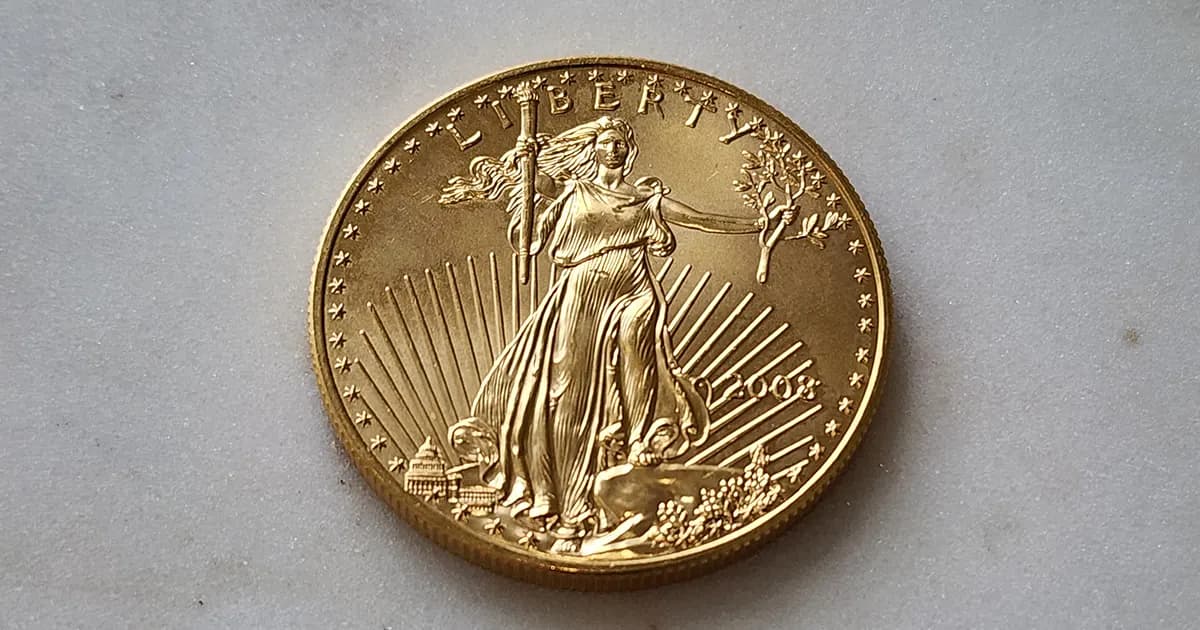
About a week ago, someone walked into my shop with an ounce of gold.
They’d called about two weeks earlier and I’d given them an estimate based on spot price at the time: around $5,000.
When they showed up, spot had dropped to $4,400.
They still wanted the $5,000 anyway. They got upset when I showed them the current market price. They left without selling.
Here’s the thing: this happens because some people treat precious metals like a car sitting on a lot.
They think the price stays put until they’re ready to make a move.
It doesn’t.
The Illusion of Knowing What You Own
You know how much is in your bank account, but you don’t track the dollar’s value every day.
You know how many shares of stock you hold, but you might only check your portfolio a few times a year.
Most people couldn’t tell you what spot price is for gold or silver right now—even if they own the metal.
People just aren’t following their metal values closely at all.
And I get it. It’s not your full-time job to watch markets. It’s mine.
But when you walk into my shop expecting a price from two weeks ago while the market’s moved hundreds of dollars, that disconnect costs you real money.
The Volatility You’re Not Watching
Today, the spread on silver was exactly $10.
Low bid: $60.89. High ask: $70.89.
That’s a massive swing in a single day on a tight product market like silver.
Gold isn’t much better. On March 23, 2026, spot gold plummeted as much as 8% to a four-month low in early Asian and European trading—its worst single-session move in years.
The precious yellow metal lost almost 10% that week in its worst showing since September 2011. That is until this week when it posted it’s worse week in 43 years.
Silver recorded its strongest annual performance since 1983 in 2025, with prices surging to intraday highs near $117 before retracing to around $90.
That’s what I mean by volatility. Silver’s volatility is roughly twice that of gold.
And you can’t expect yesterday’s price to be good today.
Why People Operate on Delayed Information
Most of my customers fall into one of two groups:
Group One: They’re watching the market like hawks. Maybe 5% of people who walk through my door.
Group Two: They’re reacting to life events or news cycles. That’s the other 95%.
Group Two hears something on the news about gold hitting a record high. They remember they have an ounce sitting in a drawer. They call me a week later expecting that record price.
By then, the market’s already corrected.
They’re buying on news rather than on the market.
And I understand why. Investor sentiment drives short- to medium-term metal price swings. When confidence rises and equities rally, you’ll see reduced demand for gold and silver as traders favor higher-yielding, growth-oriented assets.
That rotation pressures precious metal prices downward.
So people react to headlines instead of tracking spot prices. They assume their assets hold static value between purchase and sale or that it only goes up.
That assumption breaks down the moment they try to sell.
The Car Lot vs. The Metals Market
Here’s how most people think it works:
You go to a car lot. The car is priced at $5,000. You come back a week later and the price dropped to $4,500. You’re not going to pay $5,000 anymore. You’re super happy you waited and got a better price. No one ever complains about paying less.
If the dealer raises it to $6,000, you’re going to question that and be upset about it.
That makes sense in the car market because cars don’t change price intraday like gold and silver do. Sure mortgage rates may be fluctuating. Maybe the car loan interest could be affected on a day when the Fed meets. But most asset prices aren’t a moving target.
Precious metals move constantly. The market can shift between the time you call me and when you walk through the door.
If I know you well and trust you’re bringing the cash no matter what, I’ll lock the price for you when you call with a crystal clear understanding. But for everyone else, that estimate is just that—an estimate based on this moment.
And I’m pretty transparent about that and try not to give any false expectations.
What Happens When Liquidity Disappears
Here’s something most people don’t realize: when volatility spikes, liquidity often evaporates.
Market makers reduce the size at which they’re willing to quote prices. Spreads widen. Price gaps appear.
Ole Hansen of Saxo Bank noted that “volatility feeds on itself.” Gold and silver had already been bracing for extreme moves as soaring prices and volatility strained traders’ risk models and balance sheets.
Wild price swings meant banks were struggling to trade with investors.
Once their willingness to quote prices in size faded, liquidity deteriorated further and volatility blew out.
This is why I can’t lock in prices for people I don’t know and trust.
The risk is too high when the market’s moving this fast.
The Psychology Behind the Disconnect
The customer who wanted $5,000 for their ounce of gold wasn’t trying to rip me off.
They just weren’t paying attention like I do. It’s my business. I make it my business to know what spot price is every day and throughout the day.
They realized they had $5,000 sitting in their hand with that ounce of gold. For whatever reason, they couldn’t make it in right away. A week went by. The need got more urgent to sell.
They thought they could just sell it at the same price it was last week.
When I showed them the chart and explained that spot had dropped from $5,000 to $4,400, they still pushed back.
They left to shop around.
They won’t find a better price anywhere than what I had in the current market situation. But they didn’t want to hear it.
I often invite people to call around. Many still call me back.
The Hard Truth About Holding Metals
There are three main drawbacks with precious metals:
Storage: You need somewhere secure to store them.
Insurance: You need to insure them along with keeping them safe.
Liquidity: They aren’t liquid.
That’s why I created a place where I can make metal liquid—offer cash for gold and silver with very good pricing on both buying and selling.
But here’s what people need to understand: liquidity only matters if you’re paying attention to what your assets are worth when you need to sell.
If you bought silver at $120 in January and you come in today when it’s $69, you’re going to be unhappy. Your investment’s cut almost in half.
That’s not me. That’s the market.
And I was almost exclusively buying during that spike so everyone has largely been happy that sold then. And people are still happy selling today with a little bit of “I wish I woulda”.
What Real-Time Awareness Actually Requires
If you’re holding precious metals but not tracking them daily, here’s what I tell people:
At least occasionally look at the market and see where your investment stands.
Don’t base your decisions on the news. Base them on what makes sense for your financial situation.
If you need money now, sell. If you’re trying to sell at a good spot, wait for a peak. If you’re trying to buy, wait for a pullback.
Those happen all the time. There are peaks and valleys.
Unless you’re super urgent today, buy or sell when you’re comfortable—not based on what CNBC said.
And when you do decide to sell, check the current spot price that day before walking in anywhere.
That way there’s no surprise when you hear the offer.
Why This Matters More Now
All markets are volatile today in light of wars and political uncertainty. Take a look at stocks, crypto, oil.
Gold and silver—assets frequently viewed by investors as stores of value during periods of economic uncertainty—tend to react quickly to changes in monetary policy signals and broader market sentiment.
This disconnect between what investors think they know and what’s actually happening in real-time markets gets more dangerous when volatility increases.
Once prices breached key technical levels in March 2026, automated sell-offs were triggered. Stop-loss orders, margin calls, and tighter margin requirements forced investors to liquidate positions rapidly.
Thin liquidity further intensified the drop, creating sharp intraday swings.
Operating on delayed information in volatile markets can cost you thousands.
The Local Advantage
Here’s what I offer that most online buyers can’t:
Face-to-face transactions with transparent pricing.
When you walk into my shop, I show you exactly where spot is right now. I explain my premium or discount. You can see the chart. You can ask questions.
I’m not some faceless corporation with hidden fees and slow processes.
I’m local. I’m part of this community in Highland, Cedar Hills, Alpine, Pleasant Grove, American Fork, Lehi, Draper, and surrounding cities.
I want people to walk away feeling like they got a fair deal.
Sometimes the market’s soft and buyers for silver are scarce. Refiners don’t want junk silver. When people come to me, I offer what I can.
I’ve had people tell me it’s too cheap. They come back after shopping around.
We have lots of five-star reviews for a reason. Not everyone buys from us. Not everyone sells to us. But for the most part, people who’ve worked with us have been happy with their experience.
That’s because I educate along with the transaction. If people don’t buy or sell with me, I still want them to be happy.
What You Need to Do Differently
If you’re holding precious metals right now, here’s my advice:
Stop treating your metals like a car on a lot.
The price changes every day. You can’t expect yesterday’s price to be good today.
Check spot pricing before you call or walk in anywhere.
Kitco, Apmex, or any reputable source will show you real-time pricing. That way you know what to expect.
Don’t let the news dictate your moves.
Wait for those peaks and valleys in the market to give you a better entry or exit point.
Understand that volatility is normal with precious metals.
Silver’s volatility is roughly twice that of gold. If you can’t handle those swings, metals might not be the right investment for you.
Work with someone local who’ll show you the numbers.
You want transparency. You want someone who’ll explain how they derive spot price and what their margin is.
You don’t want a high-pressure boiler room trying to make huge commissions on gold and silver.
The Bottom Line
I don’t have a crystal ball. I can’t tell you what the price is going to be next week or this afternoon.
I can only tell you what the price is now.
And if you’re not paying attention to what your metals are worth in real-time, you’re going to walk into my shop with expectations that may not match reality.
That customer who wanted $5,000 for their ounce of gold when spot was $4,400? They left unhappy.
They probably won’t come back.
But that’s the cost of operating on delayed information in a volatile market.
You can avoid it by staying informed, checking spot pricing regularly, and understanding that precious metals move every single day.
Or you can keep treating your metals like a static asset and get surprised when reality hits.
Your choice.
Ready to Buy or Sell in Utah Valley?
Gold Silver Crypto is Highland, Utah's trusted precious metals dealer. Call or text for a same-day evaluation.