Why Face-to-Face Still Wins: What Local Precious Metals Dealing Actually Looks Like in Utah Valley
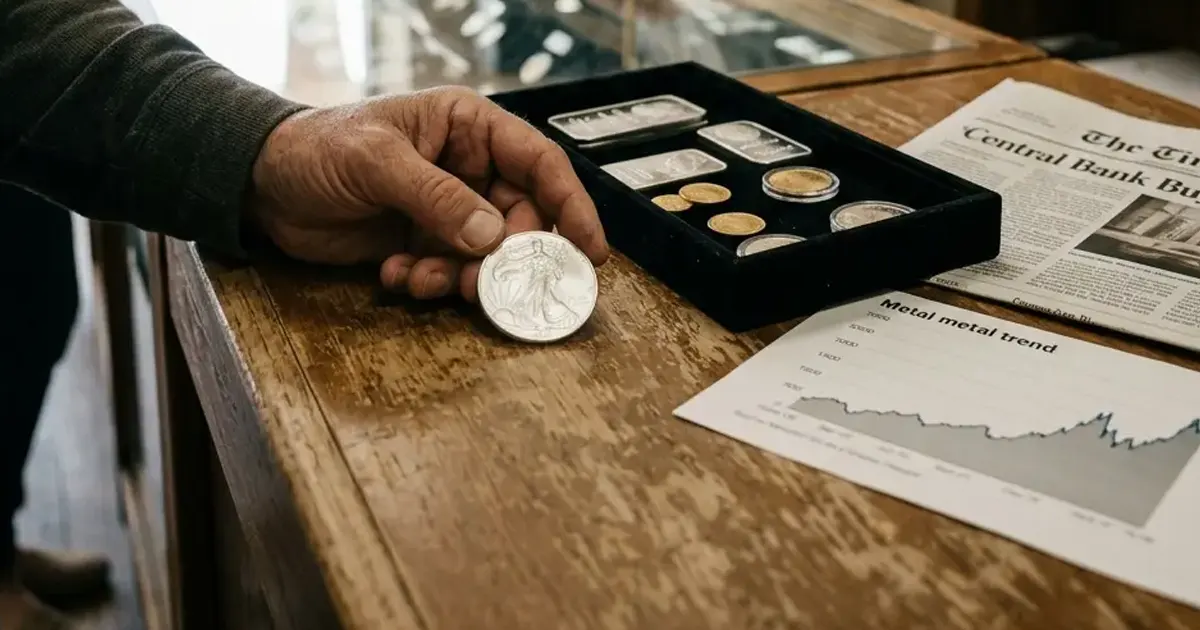
I've watched people walk into my Highland location with spreadsheets comparing online prices down to the penny, convinced they've found a better deal somewhere on the internet.
Then I show them the spot price, explain the spread, and walk them through what they're actually buying. Most of them leave with metal in hand and a different understanding of what "better deal" actually means.
The conversation around precious metals has shifted hard in the last two years. What used to be a niche interest for collectors and doomsday preppers has become a mainstream wealth protection conversation happening in living rooms across Alpine, Lehi, and American Fork.
I'm seeing it daily. The clients coming through the door aren't who you'd expect.
The People Actually Buying Physical Metals Right Now
Three types of people walk into Gold Silver Crypto on a regular Tuesday.
First: families who watched their parents lose purchasing power and decided they're not repeating that pattern. They're not buying gold because they think the system is collapsing. They're buying it because they've done the math on inflation and realized their savings account is bleeding value every month.
Second: local investors who've already built traditional portfolios and recognized the concentration risk. These are professionals in their 40s and 50s who understand diversification beyond stocks and bonds. They're adding physical metals because gold demand hit a record $193 billion in Q1 2026, and central banks added 244 tonnes of physical gold in the same period.
When sovereign buyers view current prices as a strategic entry point, local investors pay attention.
Third: first-time buyers who want to hold something real. These are people in their 30s who grew up digital-native and are now questioning whether everything valuable should exist as numbers on a screen. They want to see it, touch it, and put it in a safe.
What surprises most people is how normal these conversations are. Nobody's panicking. Nobody's predicting collapse. They're just recognizing that silver markets have been in deficit for six consecutive years, with demand exceeding mine supply by 160-200 million ounces annually, and they want exposure to that structural reality.
What Actually Sits on the Shelf
Most people walk in expecting gold and silver. They're not wrong, but they're missing half the picture.
**Sovereign minted coins** are the foundation. American Eagles, Canadian Maples, Austrian Philharmonics. These carry government backing, recognizable designs, and liquidity anywhere in the world. When someone's buying their first ounce, this is where we start.
**Bars and rounds** offer better pricing for people buying volume. A 10-ounce bar of silver costs less per ounce than ten individual coins because you're not paying for the minting premium. For clients building reserves, this is where the math gets interesting.
**Platinum and palladium** surprise people. Most clients don't realize these metals exist as investment options until they see them in person. Platinum's supply deficit is expected to hit 480,000 ounces in 2026, with global reserves covering only about five months of demand. That's not speculation—that's structural shortage.
The product depth matters because it changes the conversation from "should I buy gold?" to "what allocation makes sense for my situation?"
I've had clients come in planning to buy gold, learn about the platinum supply dynamics, and walk out with a split allocation they never considered. That conversation doesn't happen through a checkout cart on a website.
Why the Timing Conversation Keeps Coming Up
The question I hear most often: "Is now a good time to buy?"
I don't answer that with predictions. I answer it with what's actually happening in the market right now.
J.P. Morgan forecasts gold averaging $6,000 per ounce by Q4 2026, moving toward $6,300 by end of 2027. They're projecting silver at $81 per ounce for 2026—more than double its 2025 average. Goldman Sachs is calling for $85-100, and Citi issued a target of $110 for the second half of 2026.
These aren't fringe voices. These are institutional research desks explaining why industrial demand for silver in solar panels, EVs, and AI hardware is consuming more supply than mining can replace.
When clients ask why they're buying now, the answer is usually some version of: "I'm watching what central banks are doing, and I want to do the same thing at my scale."
That sentiment is local. It's not driven by national news cycles. It's driven by conversations happening in Pleasant Grove coffee shops and Draper dinner tables where people are comparing notes on how they're protecting what they've built.
The Wealth Protection Shift
The narrative around precious metals used to be reactive. People bought gold when things felt unstable.
What I'm seeing now is proactive. People are buying before they feel forced to.
They're recognizing that economic uncertainty, inflation pressure, and market volatility aren't temporary disruptions. They're baseline conditions. Precious metals aren't a panic move anymore. They're a structural position in a long-term wealth strategy.
That's the shift. And it's happening in real time across Utah Valley.
What "Local" Actually Means in This Market
The internet solved the information problem. You can compare prices across fifty dealers in five minutes.
But it didn't solve the trust problem. And in precious metals, trust is the entire transaction.
When you buy online, you're trusting:
- The photos match what ships
- The weight is accurate
- The dealer will actually send your order
- Your package won't disappear in transit
- The return policy works if something's wrong
When you buy locally, you verify everything before you leave. You see the metal. You confirm the weight. You ask questions and get answers from someone who's accountable to the community they live in.
That accountability isn't abstract. I run into clients at the grocery store in Highland. I see them at local events. If I sell someone overpriced junk, I don't just lose a customer—I lose my reputation in a community where word travels fast.
The local model forces honesty in a way online platforms can't replicate.
The Education Gap
Most people buying precious metals for the first time don't know what questions to ask.
They don't know the difference between numismatic value and melt value. They don't understand why premiums vary between products. They don't realize that some dealers build opacity into their pricing model specifically to exploit that knowledge gap.
When someone walks into my location, I explain all of it. I show them spot pricing in real time. I break down where premiums come from. I tell them when they're better off shopping around because the market's soft on certain products right now.
That last part costs me transactions in the short term. But it builds trust that brings people back for decades.
The face-to-face interaction allows me to educate during the transaction instead of after. By the time someone leaves, they understand what they bought and why it's priced the way it is. That clarity doesn't exist in a checkout flow.
The Liquidity Problem Nobody Talks About
Precious metals have value. Everyone agrees on that.
But value only matters if you can access it when you need it.
Most people buy metals online, store them in a safe, and assume they can sell them back easily when the time comes. Then they try to liquidate and discover the friction: shipping costs, verification delays, price negotiations over email, and the reality that many online dealers don't buy back at competitive rates.
The local model solves this. When you need to convert metals back to cash, you walk through my door, I verify the product, and we transact at spot pricing within minutes.
That liquidity is the unlock. It transforms precious metals from something locked in a safe to something you can actually use when it matters.
I've had clients sell metals to cover unexpected medical bills, business opportunities, or family emergencies. The transaction happened same-day because they didn't have to ship anything or wait for payment processing.
This is the part of precious metals ownership that most people don't think about until they need it. And by then, it's too late to wish they'd built a relationship with a local dealer.
What Happens Next
The precious metals market in Utah Valley is shifting from niche interest to normalized wealth strategy.
More families are asking about allocation. More investors are adding physical metals to diversified portfolios. More first-time buyers are walking in curious about what they've been hearing from friends and neighbors.
The online dealers will continue to compete on price. They'll run promotions and optimize checkout flows and build sophisticated marketing funnels.
But they can't compete on the thing that actually matters in this market: the ability to look someone in the eye, show them the numbers, and build trust through transparency.
That's what local means. And in a market where trust is everything, it's the only advantage that compounds over time.
If you're in Highland, Alpine, Lehi, Cedar Hills, Pleasant Grove, American Fork, or Draper, and you've been thinking about adding physical metals to your wealth strategy, come by Gold Silver Crypto. I'll show you spot pricing, explain the products, and answer every question you have.
No pressure. No sales tactics. Just numbers, clarity, and a transaction you'll understand completely before you make it.
That's how this works when you do it face-to-face.
Ready to Buy or Sell in Utah Valley?
Gold Silver Crypto is Highland, Utah's trusted precious metals dealer. Call or text for a same-day evaluation.