What to Do With Inherited Coins, Silver and Jewelry
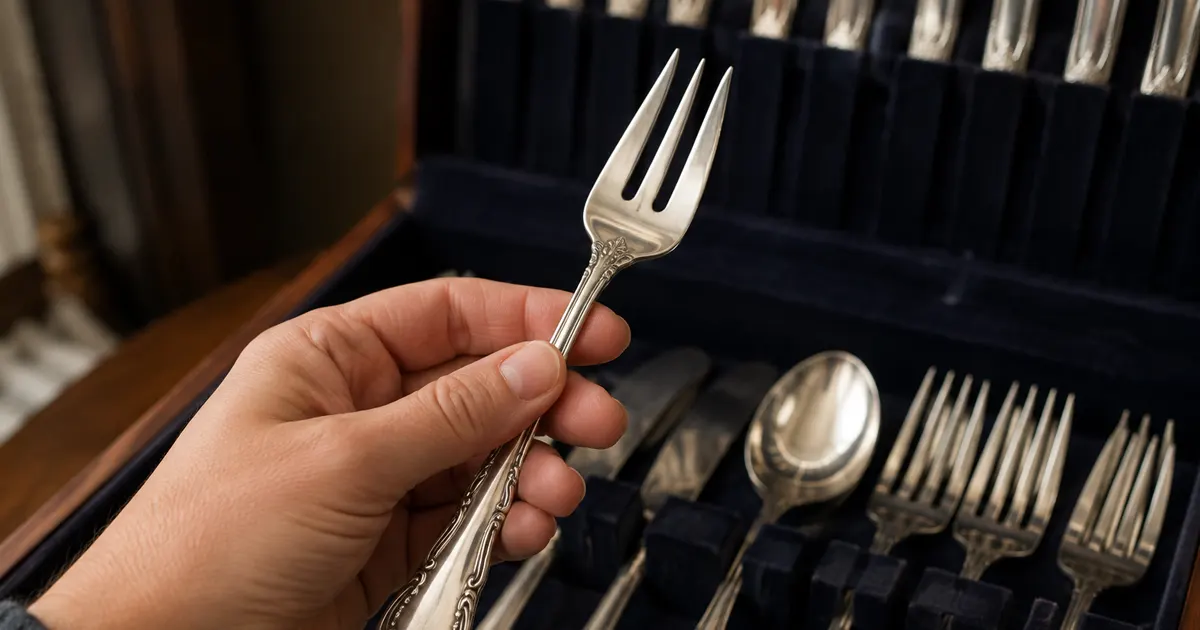
We get calls most days with people wondering what to do with inherited coins, silver, jewelry and other family valuables. These items once considered treasured heirlooms spend years tucked away in drawers, closets and cabinets.
I've faced the same thing myself. I have a gold pin from my grandfather. Gold my father panned and coins we collected. My kids have shown no interest and I've lost all sentiment for the things. The memories remain and the objects hold no personal value anymore.
There was a time when the good silver was something you kept.
Sterling silver flatware came out for holidays and special occasions. Silver platters were polished before company arrived. Coin collections were carefully tucked away, added to over decades and eventually handed down. Jewelry passed from one generation to the next, whether anyone actually wore it or not.
These possessions represented more than their monetary value. They were symbols of accomplishment, family history and, in some cases, status.
But something has changed.
Today, many people inherit these same possessions and find themselves asking a very practical question:
What am I supposed to do with all of this?
We see it regularly at Gold Silver Crypto. Someone comes in carrying a box that has been sitting in a closet, drawer, safe or basement for years. Inside might be their parents' sterling silver flatware, a grandfather's old coins, jewelry nobody in the family wears anymore or a collection they inherited but know very little about.
There can still be tremendous affection for the person who owned these things.
There just isn't necessarily the same attachment to the things themselves.
And that's an important distinction.
What to Do With Inherited Coins When Sentimentality Changes
Selling something you inherited doesn't mean the person who gave it to you meant any less.
Sometimes an object simply doesn't have a place in your life.
A set of sterling silver flatware may have been one of your grandmother's prized possessions. She may have carefully polished it before every Thanksgiving dinner and expected that someone in the family would eventually do the same.
But what happens when nobody does?
Today's families tend to entertain differently. Formal dining rooms are less important in many homes. People don't necessarily want dishes that can't go in the dishwasher or silver that requires regular polishing. A large silver service can go untouched for years, even decades.
The same thing happens with jewelry.
Styles change. Rings don't fit. A necklace that looked wonderful on Mom may simply not be something her daughter or granddaughter would ever wear.
Coin collections create a different problem. Someone may inherit hundreds of coins from a father or grandfather who spent decades collecting them, only to realize that nobody else in the family shares that hobby.
None of this means we're becoming less sentimental.
It may simply mean we're becoming sentimental about different things.
When a Status Symbol Becomes Work
Sterling silver is a particularly interesting example of how values change between generations.
For generations, owning sterling silver flatware was a sign that a household had reached a certain level of prosperity. Sets were purchased for weddings, given as gifts and expanded over time.
They were meant to last.
And they did.
That's why so many of them are still sitting in homes today.
The problem is that the lifestyle surrounding them didn't necessarily last with them.
Silver tarnishes. It needs to be polished. It takes up space. And if nobody plans to use it, the family may essentially be storing a valuable precious metal in the shape of forks, spoons, serving pieces and platters.
At some point, the question changes from "Should we keep Grandma's silver?" to "Would Grandma really want this sitting in a box for another 30 years?"
For many families, the answer is no.
Is Sterling Silver Flatware Worth Anything?
If you've inherited silver flatware, serving pieces, candlesticks, bowls or platters, don't assume they're worthless just because nobody in the family wants them.
The first question is whether an item is actually sterling silver.
Sterling silver is generally 92.5% silver and is commonly marked "Sterling" or "925." Silver-plated items, on the other hand, contain only a thin layer of silver over another base metal and have a very different precious-metal value.
This distinction matters.
A box of sterling silver flatware may contain a meaningful amount of silver even when the pattern itself is no longer fashionable.
That's one of the reasons it's worth having inherited silver evaluated before donating it, giving it away or leaving it forgotten in a cabinet.
Something your family no longer has a practical use for can still have real value.
Old Coins Can Be Another Hidden Treasure
Coins are another common inheritance that families don't always know how to handle.
You may inherit an old jar of coins, rolls tucked into a drawer, a carefully organized collection or a box that seems to contain nothing more than ordinary U.S. change.
Don't be too quick to spend it.
Many older U.S. dimes, quarters and half dollars contain silver. U.S. dimes and quarters dated 1964 and earlier, for example, were generally struck in a composition containing 90% silver.
That means an old coin doesn't necessarily need to be exceptionally rare to have value.
Its precious-metal content alone may make it worth substantially more than its face value.
The United States Mint is a useful resource for learning more about U.S. coinage and the history of American coins.
Of course, some inherited coins may also have collectible or numismatic value beyond their metal content. That's why it's useful to know what you have before making decisions about selling an inherited coin collection.
What About Inherited Jewelry?
Jewelry may be the most emotional category of all.
A ring, bracelet or necklace is much more personal than a stack of silver quarters. You may remember seeing your mother or grandmother wearing it. You may know exactly where it came from and why it mattered to her.
But that doesn't mean you have to wear it.
And it doesn't mean you have to keep every piece forever.
Many people keep one or two pieces that have a particularly strong emotional connection and sell the rest.
Others decide that none of the jewelry fits their life or style.
There is no rule saying that honoring someone requires you to keep everything they owned.
Gold jewelry can retain value even when it is broken, damaged, missing stones or hopelessly out of style. The same can be true for silver jewelry and certain other precious-metal pieces.
If you have inherited jewelry you don't want, an evaluation can at least tell you what you have before you decide what to do next.
Turning an Heirloom Into Something You'll Actually Use
This may be the biggest change we're seeing.
Previous generations often saw the object itself as the store of value.
Today's generation may be more comfortable separating the value from the object.
Imagine inheriting a sterling silver service worth a meaningful amount of money. You could leave it in a cabinet for another 20 years because you feel obligated to keep it.
Or you could sell it and use the money for something that matters to your family today.
Maybe that's a family vacation.
Maybe it's paying down a bill.
Maybe it's helping a child or grandchild.
Maybe it's putting the money toward a home project.
Maybe it's buying an investment you'll actually follow and understand.
In some ways, that can give an old possession a new story.
Dad's coin collection doesn't disappear. It becomes part of the down payment on your daughter's first car.
Grandma's silver doesn't disappear. It helps pay for a family trip everyone remembers.
A piece of jewelry that hasn't been worn in 25 years becomes something useful again.
The physical object may be gone, but its value stays in the family.
Before You Sell Inherited Coins, Silver or Jewelry
If you've recently inherited valuables, you don't have to decide immediately what stays and what goes.
Start by sorting through what you have.
Separate the items with genuine sentimental importance from the things you're keeping primarily because you feel like you're supposed to.
Then find out what the remaining items actually are.
Look for markings on silver and jewelry. Don't clean old coins in an attempt to make them look better, since cleaning can hurt the collectible value of certain coins. Keep coin collections organized if the original owner took the time to label or catalog them.
Most importantly, don't assume something has no value simply because you don't want it.
An old-fashioned piece of jewelry can still contain valuable gold.
An unwanted flatware pattern can still be sterling silver.
A worn old dime can still contain silver.
And that box you've moved from one closet to another for the past decade may contain considerably more value than you realized.
Your Memories Don't Have to Live in a Box
Possessions have always moved from one generation to another. What's changing is what each generation chooses to keep.
That's okay.
The china cabinet may not matter as much as it once did. Formal silver services may be disappearing from dinner tables. Coin collecting may be one person's lifelong passion and another person's mysterious box in the basement.
The memories connected to those possessions can still matter enormously.
You can keep Dad's favorite coin without keeping every coin he collected.
You can save Grandma's favorite necklace without keeping every broken bracelet in her jewelry box.
You can remember the Thanksgiving dinners served with the good silver without becoming the next caretaker of an eight-place sterling silver service you'll never use.
Sometimes the most practical way to appreciate what someone left behind is to recognize the value they spent a lifetime accumulating and decide how that value can serve your family now.
If you're wondering what to do with inherited coins, gold, sterling silver or jewelry, bring them into Gold Silver Crypto. We can help you understand what you have, what it may be worth and what your options are if you're ready to sell.
You may be surprised by the hidden treasures that have been sitting in your home all along.
Ready to Buy or Sell in Utah Valley?
Gold Silver Crypto is Highland, Utah's trusted precious metals dealer. Call or text for a same-day evaluation.